
Practical solutions. Honest advice.
When leaks keep returning, another patch may not solve the underlying problem. Whole-home repiping replaces aging water supply lines with a planned system. We help Naples property owners understand the condition of their plumbing and what a repipe would involve before committing to the work.
Older home plumbing
Polybutylene pipe replacement in Southwest Florida
Unsure whether your Naples or Southwest Florida home has polybutylene (PB) supply pipes? Identifying the material is a useful first step when planning a repipe.
Could your home have polybutylene?
PB was manufactured for home plumbing from 1978 to mid-1995. Construction dates are only a clue: renovations can leave mixed materials behind walls.
- Look for a visible PB2110 marking on accessible supply piping.
- PB is often gray and flexible, but color alone does not identify it.
- Visible copper connections do not rule out PB farther inside the system.
Why discuss replacement before a leak?
PB can deteriorate internally, so a dry exterior does not establish its condition. A spot repair leaves other existing PB in place. Ask a licensed plumber to confirm the material and discuss replacement options; a visual check cannot predict when a pipe might fail.
Identification and condition guidance: InterNACHI’s polybutylene guide ↗.
Start with a clear repiping scope
Share any inspection report, past leak history, and photos of accessible pipe markings. We can discuss replacement materials, the supply lines included, wall access, water interruptions, and who handles finish repairs. For condos, include your association’s access requirements.
Ask about polybutylene replacement →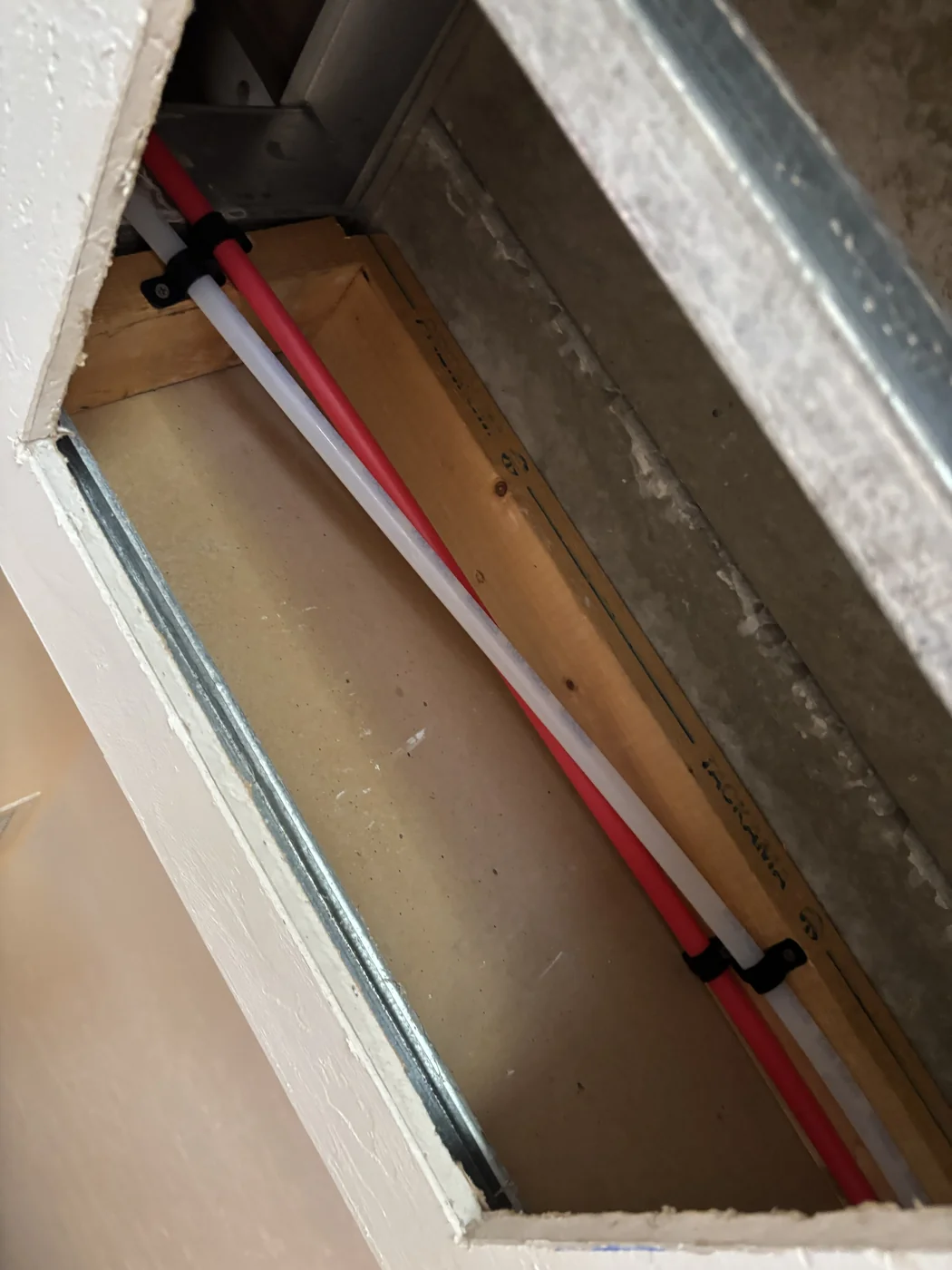
Signs you need service
- Repeated pinhole leaks in different parts of the home
- Visible corrosion or recurring discolored water
- Old galvanized or polybutylene supply lines
- Pressure problems that remain after fixture repairs
Understanding your options
A localized repair can be appropriate for an isolated failure. A partial or whole-home repipe may make more sense when the piping system is deteriorating. Material selection, including PEX or CPVC where appropriate, depends on the building and installation requirements.
What’s included
Planning starts with accessible pipe inspection, fixture counts, routing and shutoff locations. We discuss water interruptions, access openings and who will handle wall restoration. The completed supply system is checked before normal use resumes.
Understand the piping you have
A home's construction date is a starting point, not a reliable inventory of its plumbing. Renovations may leave a mix of materials and repair methods behind the walls. If you have records identifying polybutylene, copper, galvanized pipe or previous replacements, share them during planning. We discuss what can be confirmed from accessible areas and what remains concealed. Repeated problems should be assessed as a pattern, rather than assuming a full repipe is necessary because one fitting leaked or because a nearby home needed replacement.
Compare a repair, partial replacement and full repipe
Ask how each option addresses the actual failure history. An isolated accessible defect may have a different answer from leaks recurring in several parts of the supply system. A partial replacement should clearly identify what old piping remains and where the new section connects. A whole-home proposal should identify the fixtures served, material, route and exclusions. The most useful comparison is the complete scope and expected disruption, not simply a material name. Ask for clarification if one estimate includes restoration and another leaves it to the owner.
Plan access and time without water
Repiping is easier to manage when everyone understands access and the sequence of work. Discuss occupied rooms, stored belongings, pets and the person responsible for opening the property. Ask when water interruptions are expected and whether there are points in the schedule when fixtures cannot be used. For a seasonal Naples home, do not assume the project can proceed unattended; arrange a local contact and approval process. For a condo, establish whether the work affects a shared system before scheduling an interruption.
Keep the project boundaries clear
Supply piping, drains, fixtures and wall finishes are distinct parts of a property. Make sure the estimate says which systems are included and whether fixture replacement is part of the project. Discuss applicable permitting with the contractor for your address and the authority responsible for the work. At completion, ask for the relevant project documentation and an explanation of accessible shutoffs. Record who handles any remaining finish work and how to report a concern. Those details are especially helpful when a property manager oversees the home for an absent owner.
What affects the price?
Home size, the number of bathrooms, pipe routing, wall access, material selection and restoration work affect cost. Condo projects may also require association coordination and building access approvals.
Contact us to discuss your property and the issue you are experiencing. We will explain the next step and the information needed for an estimate.