
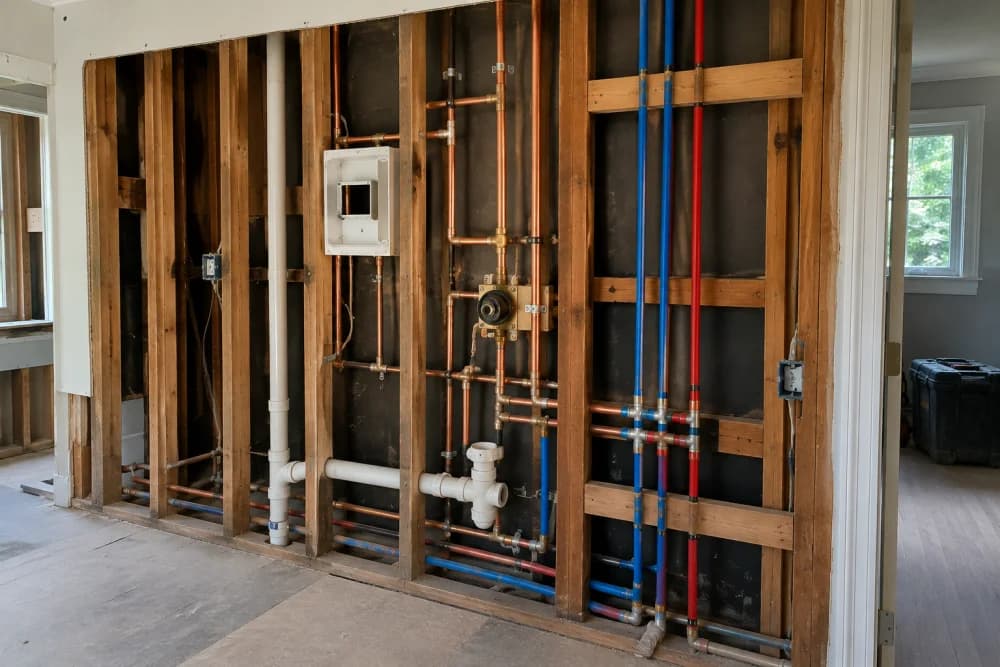
At a glance
Confirm whether PB is present, then compare a clearly defined replacement scope, access plan, and restoration responsibilities.
Start by confirming the pipe material
If an inspection report mentions polybutylene, bring it to your repiping consultation. PB was manufactured for residential plumbing from 1978 to mid-1995. That period is a clue, not proof of what is inside your home. Visible PB2110 markings can help identify it; gray color alone cannot. A licensed plumber can assess accessible piping and explain what remains concealed.
Why a dry pipe is not the whole story
Polybutylene can deteriorate internally. An exterior that looks sound does not establish its condition or predict its remaining life. Replacing a leaking connection also leaves the other existing pipe in place. Discuss the extent of PB in the system when comparing a repair with replacement.
Build a proposal around your property
Ask the contractor to list the supply lines and fixtures included, the proposed replacement material, and the route through the property. Identify any piping that will remain. Make sure the estimate distinguishes supply-pipe replacement from drains, fixtures, water-damage restoration, and wall finishing. This helps you compare proposals that may otherwise look similar.
Coordinate a seasonal home or condo
For a Southwest Florida home managed from out of town, appoint a local access contact and agree on who can approve changes. Discuss when occupants can expect water interruptions. Condo owners should involve building management early to clarify shared-system boundaries, access, and resident notifications. Confirm scheduling before making travel plans.
Prepare for the repiping conversation
Gather inspection notes, earlier repair invoices, and photos of safely accessible pipe markings. Explain where previous leaks occurred and which sections have already been replaced. Ask what further investigation is needed before the scope can be finalized. A clear record helps the conversation focus on your property rather than assumptions about its age or neighborhood.
Keep records after completion
Ask for the completed scope and any relevant project documentation. Note the locations of accessible shutoffs and who to contact about a concern. Keep the records with the home’s maintenance file so an owner, property manager, or future contractor can understand what was replaced.
Pipe identification and condition source: InterNACHI’s polybutylene guide ↗.
Questions to bring to your estimate
- What piping has been identified, and what is still concealed?
- Which supply lines and fixtures does the proposal cover?
- What replacement material is proposed, and why?
- When will water be unavailable?
- Who handles applicable permits, wall repairs, and final documentation?
Let’s take care of it.
Get help from a local, veteran-owned plumbing team.
Whole-Home Repiping in Naples, FL →