Practical solutions. Honest advice.
Slow drains, repeated clogs and sewer backups need more than guesswork. We help Naples homes and businesses understand where a drainage problem starts and choose a cleaning or repair method suited to the pipe. A recurring blockage can be a symptom of damage farther down the line.
Drain cleaning spotlight
Hydro jetting in Naples & Southwest Florida
When a drain keeps slowing down after clearing, buildup inside the line may need a closer look. Hydro jetting uses pressurized water to break up and flush away grease, soap, sludge, and sediment in suitable drain and sewer lines.
When hydro jetting may help
- Recurring restrictions caused by grease or soft buildup.
- Drain lines that need cleaning beyond a single localized obstruction.
- Maintenance planning for a property with a documented history of buildup.
Choose the method around the pipe
Hydro jetting is not the right answer for every blockage. Pipe material, condition, access, and the cause of the problem guide the recommendation. A camera inspection can help where visibility and access allow; cleaning will not repair a broken or collapsed line.
Plan the visit
Tell us which fixtures are affected, what clearing work has already been done, and whether there is an accessible cleanout. For condos and commercial properties, identify the person coordinating shared-line access and any interruption to use. We’ll discuss inspection and cleaning options before settling on a scope.
Ask about hydro jetting →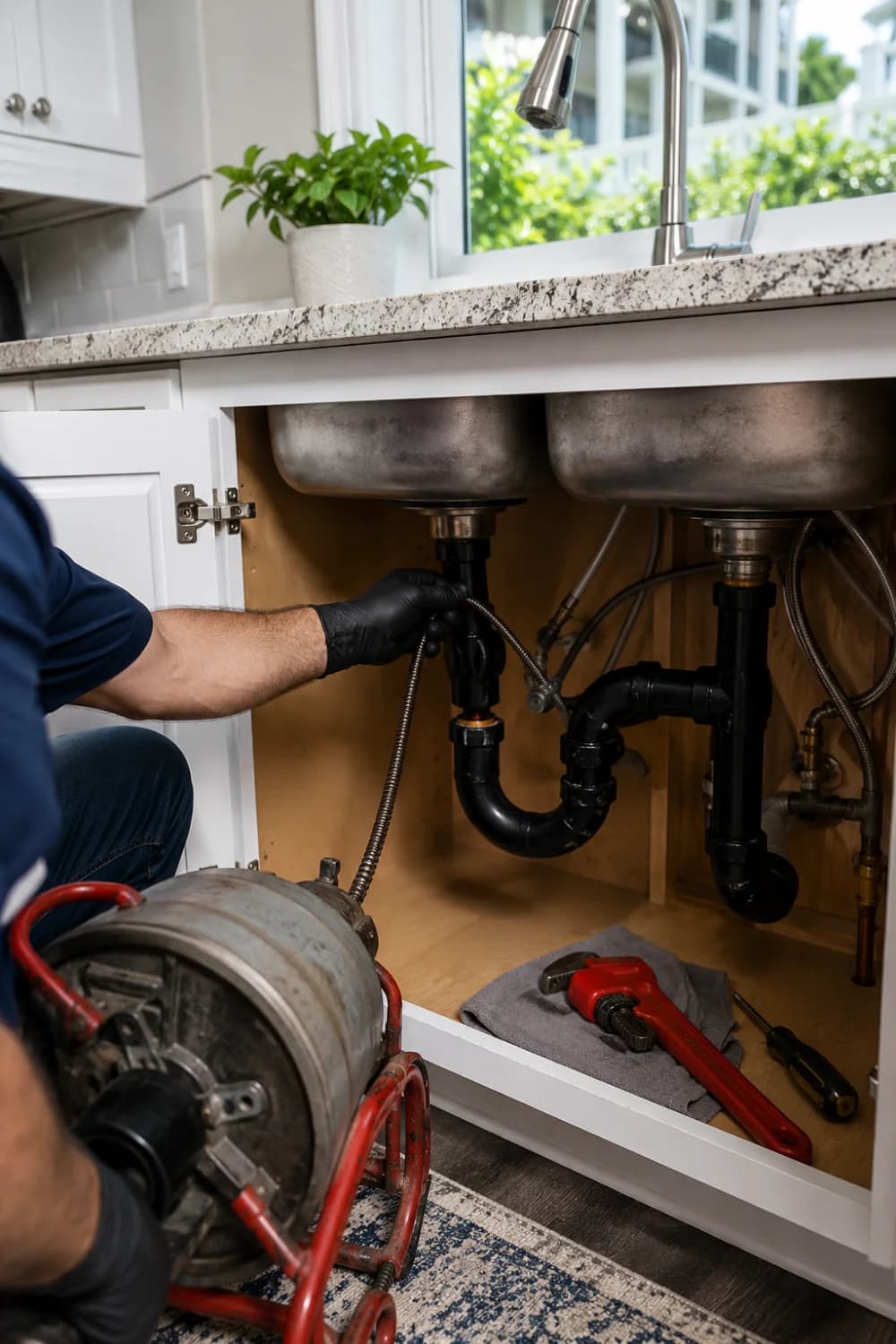
Signs you need service
- Several drains slowing down at the same time
- A clog that quickly returns after clearing
- Gurgling sounds or unpleasant drain odors
- Wastewater backing up into a tub or floor drain
Understanding your options
A localized blockage may respond to mechanical clearing. Hydro jetting may be appropriate for certain buildup when pipe condition allows it. A camera inspection can help identify roots, defects or a recurring obstruction before more extensive work is planned.
What’s included
We ask which fixtures are affected, locate accessible cleanouts and discuss the appropriate inspection or cleaning method. When a damaged line is suspected, the next step is a repair plan based on what can be confirmed.
Tell us which fixtures are affected
A slow kitchen sink and several fixtures backing up together suggest different starting points for an inspection. Tell us when the problem happens, whether the lowest drain is affected and what has already been tried. Mention any drain chemicals used so the technician can plan appropriately. Avoid repeating treatments or running more water to reproduce an active backup. In a condo, tell the property manager if multiple units may be affected; access to shared piping and responsibility for the work need to be established.
Inspection before a major repair
A camera can provide useful information when the line is accessible and conditions allow a view. Ask what portion of the line was inspected and whether an obstruction prevented the camera from going farther. A useful repair conversation distinguishes what was observed from what still needs investigation. If a line is damaged, discuss the location, access route and affected surfaces before comparing proposals. Cleaning a pipe and replacing a damaged section solve different problems, and the scope should make that distinction easy to understand.
Plan access around the building
Tell us about accessible cleanouts, gated areas, parked vehicles and rooms that require a key or an escort. For a restaurant, rental property or occupied condo, designate someone who can coordinate with the people using the space. Ask whether fixtures should remain out of use during the work and how service will be restored. If investigation indicates a buried repair, discuss landscaping, paving and restoration responsibilities. Project details depend on the location and condition of the line rather than a standard one-size-fits-all repair method.
When a blockage keeps coming back
Keep a record of the interval between clogs, which fixtures were affected and what clearing method was previously used. Share any earlier camera footage or written findings. Recurrence is a reason to reassess the cause, not a reason to assume the same treatment will always be enough. Ask what follow-up would clarify the condition of the pipe and what changes in use may be appropriate. After service, keep the findings with your maintenance records so future decisions can build on actual observations rather than starting from scratch.
What affects the price?
Location and depth, cleanout access, the length and condition of the line, inspection needs and restoration work all affect the scope. Clearing a blockage is different from repairing a broken pipe.
Contact us to discuss your property and the issue you are experiencing. We will explain the next step and the information needed for an estimate.