At a glance
A condo replacement requires equipment planning and building coordination. Confirm access and any shared-system approvals before committing to an installation date.
Start with the equipment and its location
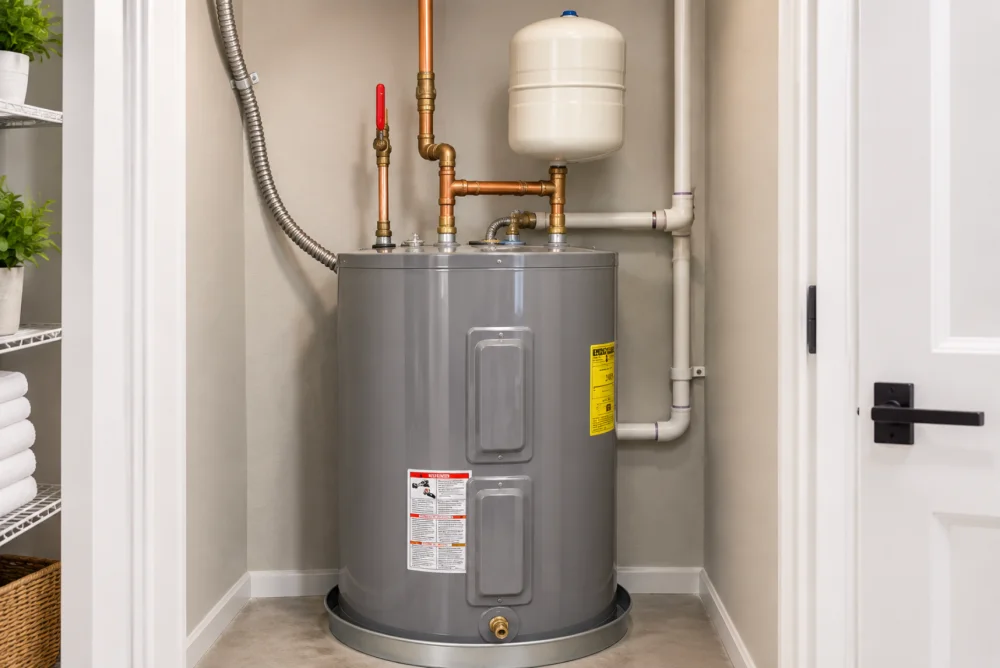
Write down the model and fuel type from the accessible label, and describe the closet or utility space. Tell your plumber about stairs, elevators and any tight access. Photos can help with planning, but they do not replace an inspection. Mention what prompted replacement: leakage, unreliable temperature, repeated repairs or a change in hot-water demand.
Ask the association about access
Before confirming a date, identify the building contact and ask about contractor entry, parking and permitted work times. If a shared-water interruption might be needed, establish who can authorize it and notify residents. A unit owner's availability alone may not be enough to arrange work on a shared system.
Compare the full scope
Ask whether the proposal includes removal, connection changes, required permit coordination and any work by other trades. A change from tank to tankless deserves a separate discussion about electrical or fuel supply and venting. Confirm the selected equipment fits the property rather than choosing on capacity alone.
Keep a useful record
After the work, keep the equipment model, installation documents and maintenance instructions together. If someone else manages your seasonal home, give them the location of the records and a contact for future service. Ask how to report a concern and what routine care the specific model requires.
Separate unit work from shared-building work
Ask management where responsibility for the affected plumbing changes from your unit to the shared system. Confirm who can authorize a building water interruption, notify neighbors, and provide equipment-room access. Get the contractor’s proposed scope and the association’s access instructions together before settling on an installation date.
Make responsibilities explicit
Ask who handles each part of the project: equipment selection, building access, any required permit coordination, resident communication and disposal. Do not assume that an association approval replaces other approvals that may apply to the work. The contractor should discuss the specific scope and address. If a manager is arranging the replacement for an owner, identify who can authorize changes discovered during inspection.
Avoid choosing a unit by size alone
A heater must suit the installation and expected demand as well as the available space. Share photos of the accessible label and surrounding area without moving equipment or opening covers. Ask what changes would be needed for each option being considered. A tankless conversion is a separate planning discussion, not simply a smaller appliance placed in the same closet. Keep the final equipment details available to anyone managing the unit after installation.
Information to gather from building management
- Contractor registration and documentation requirements
- Permitted work hours and elevator reservations
- Parking and equipment delivery access
- Who authorizes and communicates shared-water interruptions
- Any building requirements relevant to the proposed equipment
Let’s take care of it.
Get help from a local, veteran-owned plumbing team.
Water Heater Repair & Replacement in Naples, FL →